


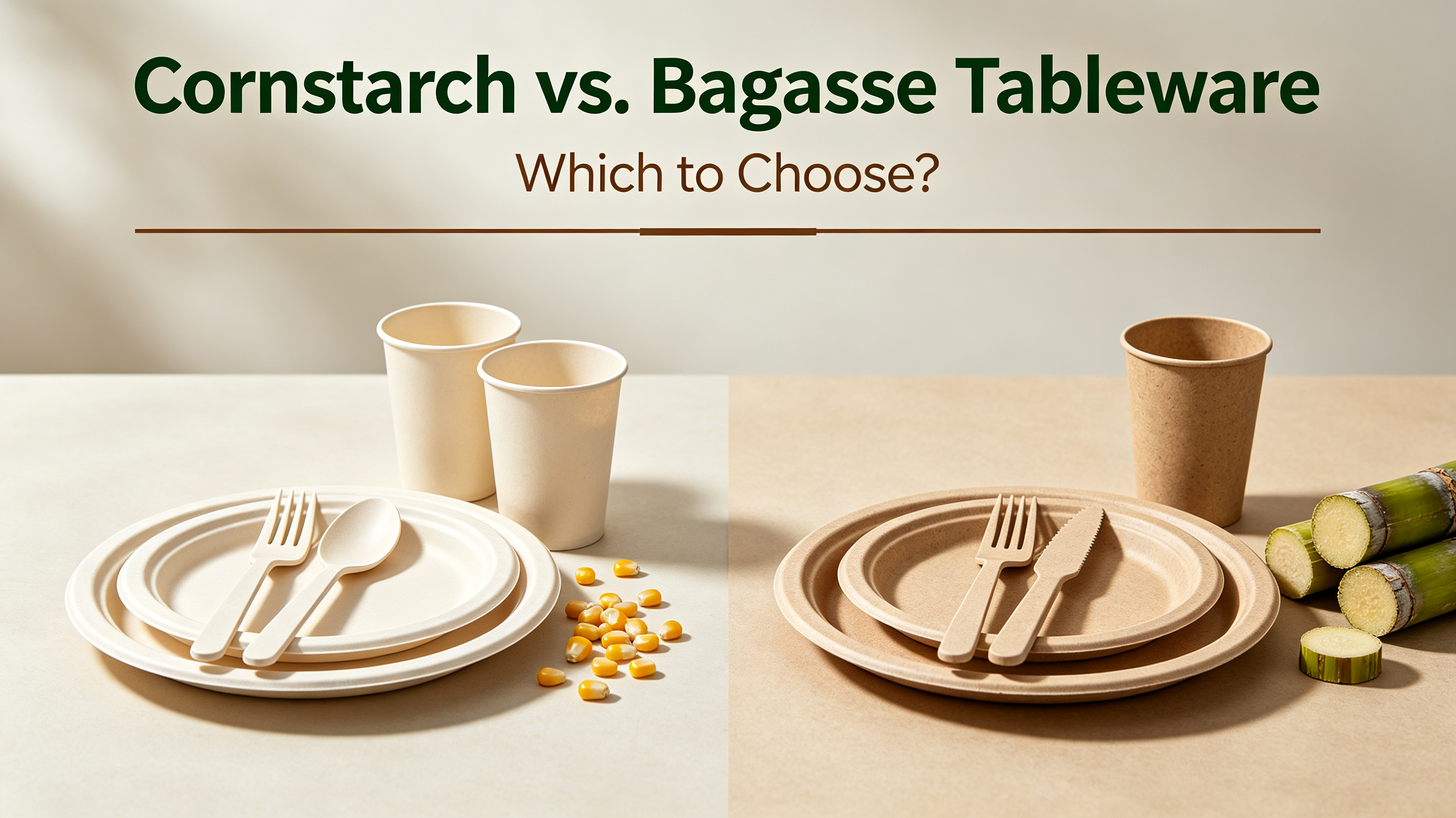
Two of the most popular plant-based materials in the tableware market are cornstarch and bagasse (sugarcane fiber). Both are compostable and plastic-free, but they are not interchangeable. Understanding the difference helps buyers choose the right product for their menu, budget, and brand.
Cornstarch tableware is made from plant starch — typically corn — processed into a durable, smooth-surfaced material. It offers a refined, consistent appearance close to conventional plastic.
Bagasse tableware is molded from the fibrous residue left after sugarcane juice extraction. It has a visible fiber texture and a more rustic, "natural" look.
Key differences at a glance
Aspect | Cornstarch | Bagasse |
Surface | Smooth, uniform | Fibrous, textured |
Heat resistance | High (hot meals, up to 100°C+) | High (hot meals, up to 100°C+) |
Oil resistance | Good | Good |
Microwave safe | Yes | Yes |
Aesthetics | Premium, consistent | Rustic, natural |
Typical price point | Mid-range | Slightly lower |
Which one fits your business?
Choose cornstarch when you want a premium, uniform look — for branded takeaway, catering, and retail shelves where presentation matters. Choose bagasse when you prioritize a rustic natural aesthetic or are optimizing cost on high-volume disposables.
The Zhaosheng advantage
Zhaosheng specializes in cornstarch-based tableware, offering clamshell boxes, cutlery, cups, and plates in a range of sizes and styles. Our products combine the smooth premium feel of cornstarch with the strength and heat resistance your kitchen demands — all fully compostable.
Not sure which material fits your market? Send us your product list and target customers, and our team will recommend the right solution.



Shantou Zhaosheng Biological Environmental Protection Technology Co., Ltd
SitemapThis website uses cookies to ensure you get the best experience on our website.



Comment
(0)