Biodegradable tableware is manufactured by blending natural plant fiber (agricultural plant residues) with plant-based resin polymer derived from renewable raw materials, then shaped via compression molding or injection molding production processes.
With global restrictions on disposable plastic products rolling out across regions, catering operators, event planners and venue managers are actively searching for eco-friendly alternatives to plastic cutlery and food packaging to reduce environmental harm. Reusable tableware remains the most ideal long-term solution, yet it cannot meet all temporary, takeaway and large-scale event scenarios.
Many buyers struggle to pick the most eco-friendly disposable tableware: which is better, biodegradable or compostable tableware? Let’s break down the key differences clearly.
What Does "Biodegradable" Mean?
The word biodegradable describes products that can decompose in natural environments, but there is no fixed standard for decomposition cycle and residue safety. This vague definition easily causes misleading marketing. Many consumers mistakenly believe all items marked “bio-” are fully eco-friendly, which is not always true.
Most people assume biodegradable goods break down fast without harmful waste, but this is not guaranteed.
Is regular biodegradable cutlery worth buying?Although tagged with an eco-friendly label, biodegradable products do not promise full, fast, non-toxic decomposition. Unlike certified compostable tableware, most regions have no unified mandatory testing standards for plain biodegradable products, with no fixed decomposition cycle or safety evaluation rules. Common issues with uncertified biodegradable cutlery:
Pollutes mixed recycling and organic waste sorting systems
Requires several years to decompose, or may not fully break down at all
May split into tiny micro plastic fragments during degradation
If a product carries both biodegradable and compostable marks, you need to confirm proper disposal ways with your supplier, including home composting and industrial compost operation specifications. Learning different composting methods helps you achieve standardized green disposal.
Authoritative global bioplastic associations issue two mainstream compostable certification standards: home compostable and industrial compostable. All certified products pass strict environmental adaptability tests.
Certified products meet strict decomposition indicators:
Home compostable tableware: Over 90% decomposed within 180 days, no toxic substances left in compost, safe for soil, plants and soil organisms under household compost conditions.
Industrial compostable tableware: Over 90% decomposed within 12 weeks under professional high-temperature compost processing.
Certified home & industrial compostable cutlery are reliable sustainable substitutes for plastic tableware. They fully break down under matched compost conditions and turn into nutrient-rich humus to improve soil fertility for planting.
Core Difference: Biodegradable VS Compostable
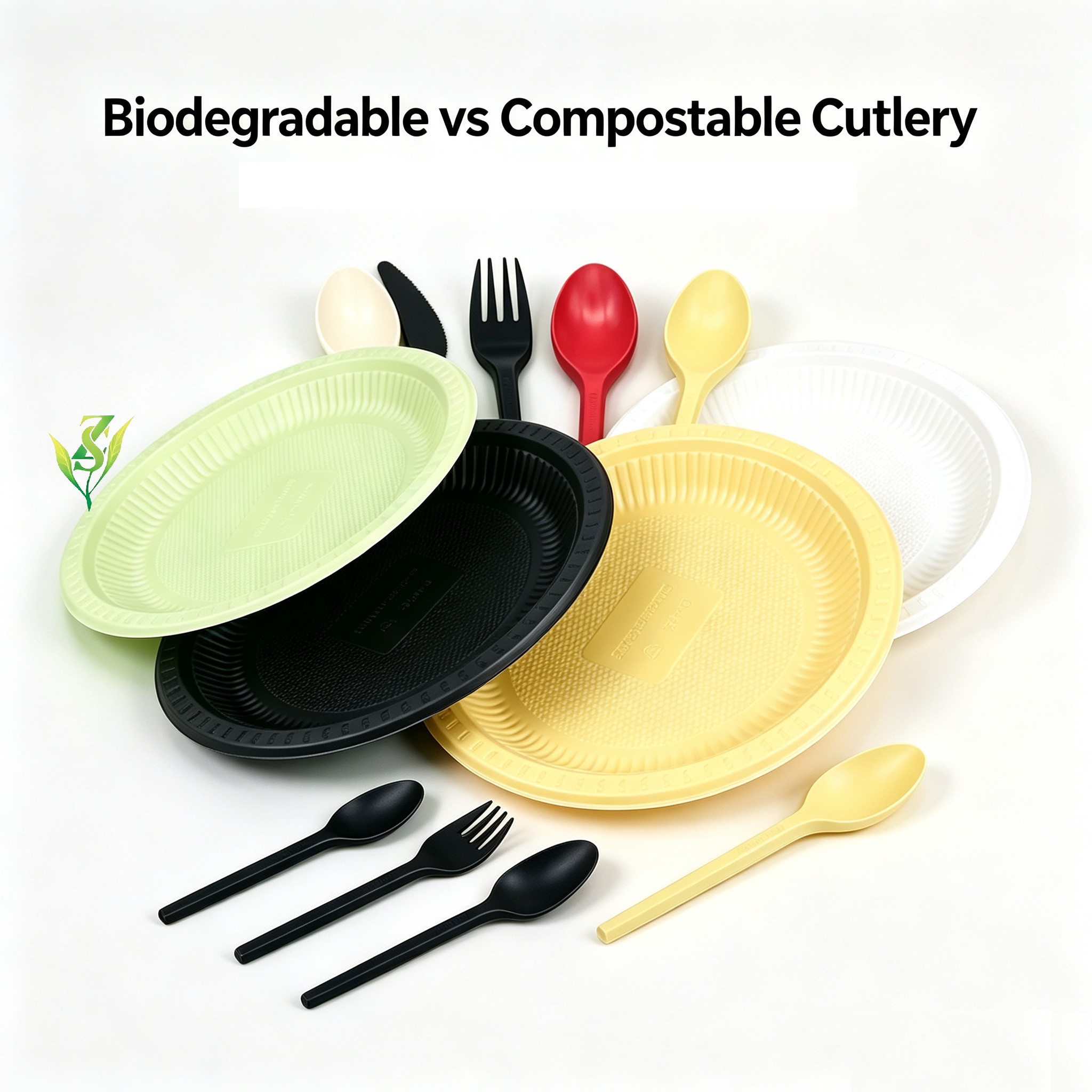
The key gap lies in standardized testing rules:Compostable products complete strict lab tests to prove full decomposition within fixed time limits under specific temperature and humidity conditions.General biodegradable products have no unified, strict testing requirements for decomposition cycle, residue safety and degradation efficiency. Main Types of Certified Compostable Utensils
Disposable compostable cutlery adopts sturdy natural raw materials including corn starch, CPLA plant polymer, birch wood and bamboo. They serve as perfect single-use green substitutes when reusable tableware is unavailable.






Comment
(0)