


In a market where customers can order from a dozen apps in seconds, packaging is the last physical impression a brand makes. Before a customer tastes the food, they feel the box — and in the age of delivery and review culture, that box is part of the product. One regional fast-food chain operating 40+ locations learned this the hard way, then turned it into an advantage. The right takeaway box, it turns out, does more than carry food. It carries the brand.
Background: a growing chain under growing pressure
The chain built its reputation on fast, consistent, affordable comfort food across a mid-sized metro region. By 2025 it had grown to more than 40 franchised and company-owned stores, with delivery accounting for roughly half of all orders. Growth brought two problems that quietly compounded:
· Operational leakage. Legacy plastic and thin PP boxes frequently popped open or warped during the 20–40 minute scooter rides typical of the market. Sauces leaked, lids separated, and "my order arrived a mess" became a recurring complaint in delivery-app reviews.
· Generational expectation. A rising share of the chain's customers — disproportionately under 35 — actively avoided brands they perceived as wasteful. Internal surveys showed "too much plastic" was among the top three reasons younger customers said they would not reorder.
Switching the packaging supplier for a 40-store network felt risky: a bad batch could disrupt every location at once. But staying on the current path risked slower growth and reputation erosion. The chain decided to pilot a change rather than gamble on a wholesale swap.
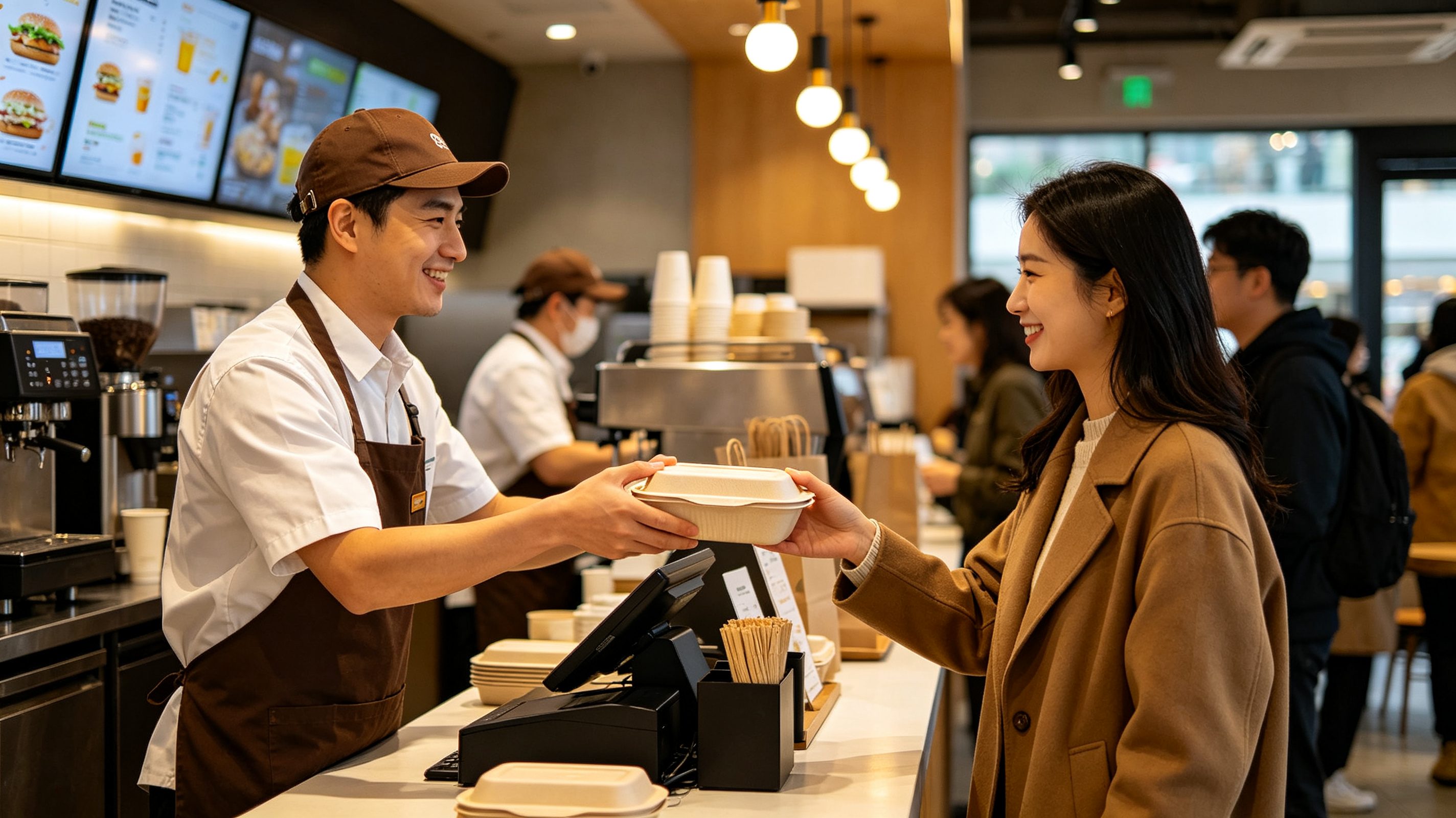
The solution: a certified, customized cornstarch clamshell
After sampling several suppliers, the chain partnered with Zhaosheng to roll out customized cornstarch (PLA+starch composite) clamshell boxes across all locations. The selection was driven by four requirements the operations team could not compromise on:
· Four-corner locking seals. Unlike lift-off lids that shift in transit, the hinged clamshell locks at all four corners. Lid pop-offs and sauce leaks during delivery effectively disappeared.
· Heat and oil resistance. Our cornstarch formula withstands serving temperatures up to 100°C and resists oil penetration, so fried and saucy items arrive intact — critical for a comfort-food menu.
· Natural beige fiber look. The matte, unbleached finish reads as "premium and responsible" on camera, which mattered because delivery photos are now part of the brand's social proof.
· Logo embossing. A subtle debossed logo on the lid turned every order into a branded touchpoint at near-zero added cost.
Crucially for a multi-location rollout, Zhaosheng held consistent quality and stable supply — same specs, same color, same seal performance across monthly shipments, so store managers never had to re-train staff on a "new" box.
Rollout: how 40 stores switched without disruption
The transition was staged over six weeks to de-risk it:
1. Weeks 1–2 — pilot. Two high-volume stores switched first; staff feedback shaped the final size mix (750 ml for mains, 500 ml for sides).
1. Weeks 3–4 — training. A one-page packing guide and a 90-second video cut average pack time versus the old two-piece box.
1. Weeks 5–6 — network-wide. Remaining stores converted in waves, with buffer stock held at the central warehouse to absorb any spike.
Because the clamshell is hinged (no separate lid to match), crew packed faster and made fewer errors — a quiet win the operations team valued as much as the marketing one.
The results: measured in three months
Within three months of full rollout, the chain tracked clear movement:
· Packaging complaints dropped by over 60% in delivery-app reviews, with "leaked / arrived messy" mentions nearly gone.
· Delivery ratings improved, and packaging began appearing as a positive comment ("love the eco box") rather than a pain point.
· Repurchase rate grew among under-35 customers — the chain attributes part of the lift to the visible, credible sustainability switch, not just a greener box.
· Packout speed rose; crew reported the hinged design cut packing steps versus the previous lid-matching box.
· Brand mentions shifted. Social posts started featuring the unboxing itself, extending reach the chain had not paid for.
What this means for you
Packaging is no longer a back-office cost to minimize — it is a customer-facing brand asset that shows up in reviews, photos, and reorder decisions. Whether you run one restaurant or a thousand, switching to certified compostable tableware can protect your food, polish your image, and grow your business, while preparing you for tightening single-use plastic rules in many markets.
The chain's story is not unique. The same four-corner seal, the same heat-resistant cornstarch formula, and the same embossing option are available to any foodservice brand ready to make the switch — and the staged rollout playbook travels with them.
Want to see how an eco packaging upgrade could work for your brand? Contact us for samples and a free packaging consultation. We will help you size the mix, proof the logo, and plan a low-risk rollout your stores will actually thank you for.



Shantou Zhaosheng Biological Environmental Protection Technology Co., Ltd
SitemapThis website uses cookies to ensure you get the best experience on our website.



Comment
(0)